-
VISUAL REVIEW: A PULITZER-WINNING PHOTOGRAPH
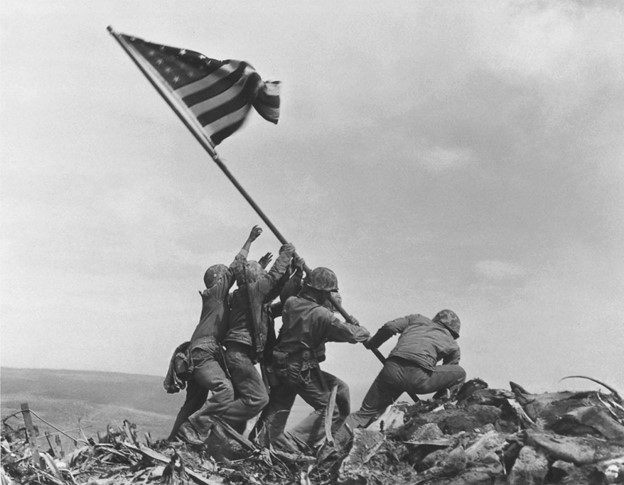
Photo: Joe Rosenthal (AP)
Joe Rosenthal took this photo on Feb. 23, 1945. He was working with the Associated Press. He had joined the U.S. military that had landed on Mount Suribachi on Iwo Jima, in Japan.
I selected this Pulitzer-winning photo because it speaks to different audiences. Its message is powerful, universal, and timeless.
For American families, this photo represented pride in American soldiers who fought for liberty. It meant courage. It meant resilience. It also meant the return of military personnel to their families. As they are raising the flag, I feel their relief in having accomplished their mission in honor of their country and the free world.
For the nation, this photo reemphasized the message of freedom, hope, democratic values, and good over evil. It triggered emotions about supporting military sacrifice. Historically, that photo marked American power. In terms of public communication, that image inspired a war-bond poster. The American public responded by raising $26 billion in the same year that World War II ended.
For the photographer Joe Rosenthal, this photo marked his life with the simple use of an unsophisticated camera and technology. He was present at that right moment and captured it. And he definitely made the right decision in choosing to photograph the six U.S. Marines raising the flag rather than lowering it. According to this photo’s background, two U.S. flags were being raised and lowered simultaneously. The military was replacing a small U.S. flag with a bigger one for visibility.
As mentioned in Kevin Leary’s article about Rosenthal, Rosenthal said, “I took the picture; the Marines took Iwo Jima.” Rosenthal gave the original photograph to John Faber, the official historian for the National Press Photographers Association. Roy H. Williams bought that photo from Faber’s estate.
White and black photography reinforces the tragedy of wars. It also clears the way for a road to peace. Like with other wars, adversaries resolve their differences with peace as the ultimate solution.
The taking of this photo didn’t involve any advanced technology in the field of photography. Its expression is in its simplicity. Rosenthal, however, had taken 60 photos covering that war period. But only one became the winning prize.
It is noteworthy that the Pulitzer Advisory Board took only two months or so to consider Rosenthal’s photo. Normally, the board considered photos published in the previous year.
There were allegations about this iconic photo being staged. The US military, Sgt. Bill Genaust, had been taking films on that island. His film was rolling as Rosenthal took photos. Genaust’s film proved those stories to be wrong.
Thomas E. Franklin took Ground Zero Spirit, a photo similar to Rosenthal’s Iwo Jima. He showed three firefighters raising a U.S. flag in the tragedy of the September 11th attacks. Such a similarity in photography depicts Rosenthal’s legacy in photojournalism as well as history.
This photo has not only made history books, but also American movies, postal stamps, and memorial statues. It is photojournalism made at the right time and at the right place. For a more detailed background, readers should watch Clint Eastwood’s movie entitled Flags of Our Fathers. And for the photographer’s perspective, they should read Rosenthal’s “The Picture That Will Live Forever.”
-
VISUAL REVIEW: A PULITZER-WINNING PHOTOGRAPH
Photo: Joe Rosenthal (AP)
Joe Rosenthal took this photo on Feb. 23, 1945. He was working with the Associated Press. He had joined the U.S. military that had landed on Mount Suribachi on Iwo Jima, in Japan.
I selected this Pulitzer-winning photo because it speaks to different audiences. Its message is powerful, universal, and timeless.
For American families, this photo represented pride in American soldiers who fought for liberty. It meant courage. It meant resilience. It also meant the return of military personnel to their families. As they are raising the flag, I feel their relief in having accomplished their mission in honor of their country and the free world.
For the nation, this photo reemphasized the message of freedom, hope, democratic values, and good over evil. It triggered emotions about supporting military sacrifice. Historically, that photo marked American power. In terms of public communication, that image inspired a war-bond poster. The American public responded by raising $26 billion in the same year that World War II ended.
For the photographer Joe Rosenthal, this photo marked his life with the simple use of an unsophisticated camera and technology. He was present at that right moment and captured it. And he definitely made the right decision in choosing to photograph the six U.S. Marines raising the flag rather than lowering it. According to this photo’s background, two U.S. flags were being raised and lowered simultaneously. The military was replacing a small U.S. flag with a bigger one for visibility.
As mentioned in Kevin Leary’s article about Rosenthal, Rosenthal said, “I took the picture; the Marines took Iwo Jima.” Rosenthal gave the original photograph to John Faber, the official historian for the National Press Photographers Association. Roy H. Williams bought that photo from Faber’s estate.
White and black photography reinforces the tragedy of wars. It also clears the way for a road to peace. Like with other wars, adversaries resolve their differences with peace as the ultimate solution.
The taking of this photo didn’t involve any advanced technology in the field of photography. Its expression is in its simplicity. Rosenthal, however, had taken 60 photos covering that war period. But only one became the winning prize.
It is noteworthy that the Pulitzer Advisory Board took only two months or so to consider Rosenthal’s photo. Normally, the board considered photos published in the previous year.
There were allegations about this iconic photo being staged. The US military, Sgt. Bill Genaust, had been taking films on that island. His film was rolling as Rosenthal took photos. Genaust’s film proved those stories to be wrong.
Thomas E. Franklin took Ground Zero Spirit, a photo similar to Rosenthal’s Iwo Jima. He showed three firefighters raising a U.S. flag in the tragedy of the September 11th attacks. Such a similarity in photography depicts Rosenthal’s legacy in photojournalism as well as history.
This photo has not only made history books, but also American movies, postal stamps, and memorial statues. It is photojournalism made at the right time and at the right place. For a more detailed background, readers should watch Clint Eastwood’s movie entitled Flags of Our Fathers. And for the photographer’s perspective, they should read Rosenthal’s “The Picture That Will Live Forever.”
-
VISUAL REVIEW: A PULITZER-WINNING PHOTOGRAPH
Photo: Joe Rosenthal (AP)
Joe Rosenthal took this photo on Feb. 23, 1945. He was working with the Associated Press. He had joined the U.S. military that had landed on Mount Suribachi on Iwo Jima, in Japan.
I selected this Pulitzer-winning photo because it speaks to different audiences. Its message is powerful, universal, and timeless.
For American families, this photo represented pride in American soldiers who fought for liberty. It meant courage. It meant resilience. It also meant the return of military personnel to their families. As they are raising the flag, I feel their relief in having accomplished their mission in honor of their country and the free world.
For the nation, this photo reemphasized the message of freedom, hope, democratic values, and good over evil. It triggered emotions about supporting military sacrifice. Historically, that photo marked American power. In terms of public communication, that image inspired a war-bond poster. The American public responded by raising $26 billion in the same year that World War II ended.
For the photographer Joe Rosenthal, this photo marked his life with the simple use of an unsophisticated camera and technology. He was present at that right moment and captured it. And he definitely made the right decision in choosing to photograph the six U.S. Marines raising the flag rather than lowering it. According to this photo’s background, two U.S. flags were being raised and lowered simultaneously. The military was replacing a small U.S. flag with a bigger one for visibility.
As mentioned in Kevin Leary’s article about Rosenthal, Rosenthal said, “I took the picture; the Marines took Iwo Jima.” Rosenthal gave the original photograph to John Faber, the official historian for the National Press Photographers Association. Roy H. Williams bought that photo from Faber’s estate.
White and black photography reinforces the tragedy of wars. It also clears the way for a road to peace. Like with other wars, adversaries resolve their differences with peace as the ultimate solution.
The taking of this photo didn’t involve any advanced technology in the field of photography. Its expression is in its simplicity. Rosenthal, however, had taken 60 photos covering that war period. But only one became the winning prize.
It is noteworthy that the Pulitzer Advisory Board took only two months or so to consider Rosenthal’s photo. Normally, the board considered photos published in the previous year.
There were allegations about this iconic photo being staged. The US military, Sgt. Bill Genaust, had been taking films on that island. His film was rolling as Rosenthal took photos. Genaust’s film proved those stories to be wrong.
Thomas E. Franklin took Ground Zero Spirit, a photo similar to Rosenthal’s Iwo Jima. He showed three firefighters raising a U.S. flag in the tragedy of the September 11th attacks. Such a similarity in photography depicts Rosenthal’s legacy in photojournalism as well as history.
This photo has not only made history books, but also American movies, postal stamps, and memorial statues. It is photojournalism made at the right time and at the right place. For a more detailed background, readers should watch Clint Eastwood’s movie entitled Flags of Our Fathers. And for the photographer’s perspective, they should read Rosenthal’s “The Picture That Will Live Forever.”
-
VISUAL REVIEW: A PULITZER-WINNING PHOTOGRAPH
Photo: Joe Rosenthal (AP)
Joe Rosenthal took this photo on Feb. 23, 1945. He was working with the Associated Press. He had joined the U.S. military that had landed on Mount Suribachi on Iwo Jima, in Japan.
I selected this Pulitzer-winning photo because it speaks to different audiences. Its message is powerful, universal, and timeless.
For American families, this photo represented pride in American soldiers who fought for liberty. It meant courage. It meant resilience. It also meant the return of military personnel to their families. As they are raising the flag, I feel their relief in having accomplished their mission in honor of their country and the free world.
For the nation, this photo reemphasized the message of freedom, hope, democratic values, and good over evil. It triggered emotions about supporting military sacrifice. Historically, that photo marked American power. In terms of public communication, that image inspired a war-bond poster. The American public responded by raising $26 billion in the same year that World War II ended.
For the photographer Joe Rosenthal, this photo marked his life with the simple use of an unsophisticated camera and technology. He was present at that right moment and captured it. And he definitely made the right decision in choosing to photograph the six U.S. Marines raising the flag rather than lowering it. According to this photo’s background, two U.S. flags were being raised and lowered simultaneously. The military was replacing a small U.S. flag with a bigger one for visibility.
As mentioned in Kevin Leary’s article about Rosenthal, Rosenthal said, “I took the picture; the Marines took Iwo Jima.” Rosenthal gave the original photograph to John Faber, the official historian for the National Press Photographers Association. Roy H. Williams bought that photo from Faber’s estate.
White and black photography reinforces the tragedy of wars. It also clears the way for a road to peace. Like with other wars, adversaries resolve their differences with peace as the ultimate solution.
The taking of this photo didn’t involve any advanced technology in the field of photography. Its expression is in its simplicity. Rosenthal, however, had taken 60 photos covering that war period. But only one became the winning prize.
It is noteworthy that the Pulitzer Advisory Board took only two months or so to consider Rosenthal’s photo. Normally, the board considered photos published in the previous year.
There were allegations about this iconic photo being staged. The US military, Sgt. Bill Genaust, had been taking films on that island. His film was rolling as Rosenthal took photos. Genaust’s film proved those stories to be wrong.
Thomas E. Franklin took Ground Zero Spirit, a photo similar to Rosenthal’s Iwo Jima. He showed three firefighters raising a U.S. flag in the tragedy of the September 11th attacks. Such a similarity in photography depicts Rosenthal’s legacy in photojournalism as well as history.
This photo has not only made history books, but also American movies, postal stamps, and memorial statues. It is photojournalism made at the right time and at the right place. For a more detailed background, readers should watch Clint Eastwood’s movie entitled Flags of Our Fathers. And for the photographer’s perspective, they should read Rosenthal’s “The Picture That Will Live Forever.”
 Philippe Abizeid's Visual Literacy